How to Do the Kibbe Personal Line Sketch for Soft Naturals
 Kibbe Body
This guide is based on David Kibbe's book The Power of Style, which covers the updated technique for finding your Image Identity with the Personal Line as its practical foundation.
The Image Identity Formula
Image Identity has replaced the older concept of Kibbe Type and is built from two essential pieces: Yin/Yang Balance and Personal Line. Your Yin/Yang Balance describes your physical body, placing you on a scale that runs from sharp yang to soft yin. Your Personal Line, however, acts as the blueprint for the silhouette your body needs, telling you exactly what your clothes should do to look their best. When these two pieces meet, you arrive at one of ten possible Image Identities.
What Is Personal Line
Your Personal Line is a continuous outline that traces how your body's proportions relate to one another. Rather than reading it directly off your body, you must work it out by looking at your full-body proportions as one whole unit.
Every Personal Line consists of a Dominant and an Additional trait. There are two possible Dominants—Vertical and Curve—and six possible Additionals: Curve, Width, Narrow, Balance, Double Curve, and Petite. Note that Vertical only ever appears as a Dominant. Once your Dominant and Additional are paired, you have your Personal Line, which your clothing silhouette is then built to follow.
The Five Archetypes on the Yin/Yang Scale
The yin/yang scale is defined by five archetypes that serve as reference points for every Image Identity.
• Dramatic represents the extreme sharp yang end of the scale, characterized as narrow and elongated.
• Romantic is at the soft yin extreme, defined by a lush and curvaceous frame.
• Classic sits at the center, perfectly balanced between the two extremes.
• Natural is also yang, but with a blunt-edged quality rather than a sharp one.
• Gamine is a unique mix of opposites, featuring a small yin size with a sharp yang frame.
Your specific Image Identity always lands somewhere on this map in relation to these five points.
The Fabric-Draping Method
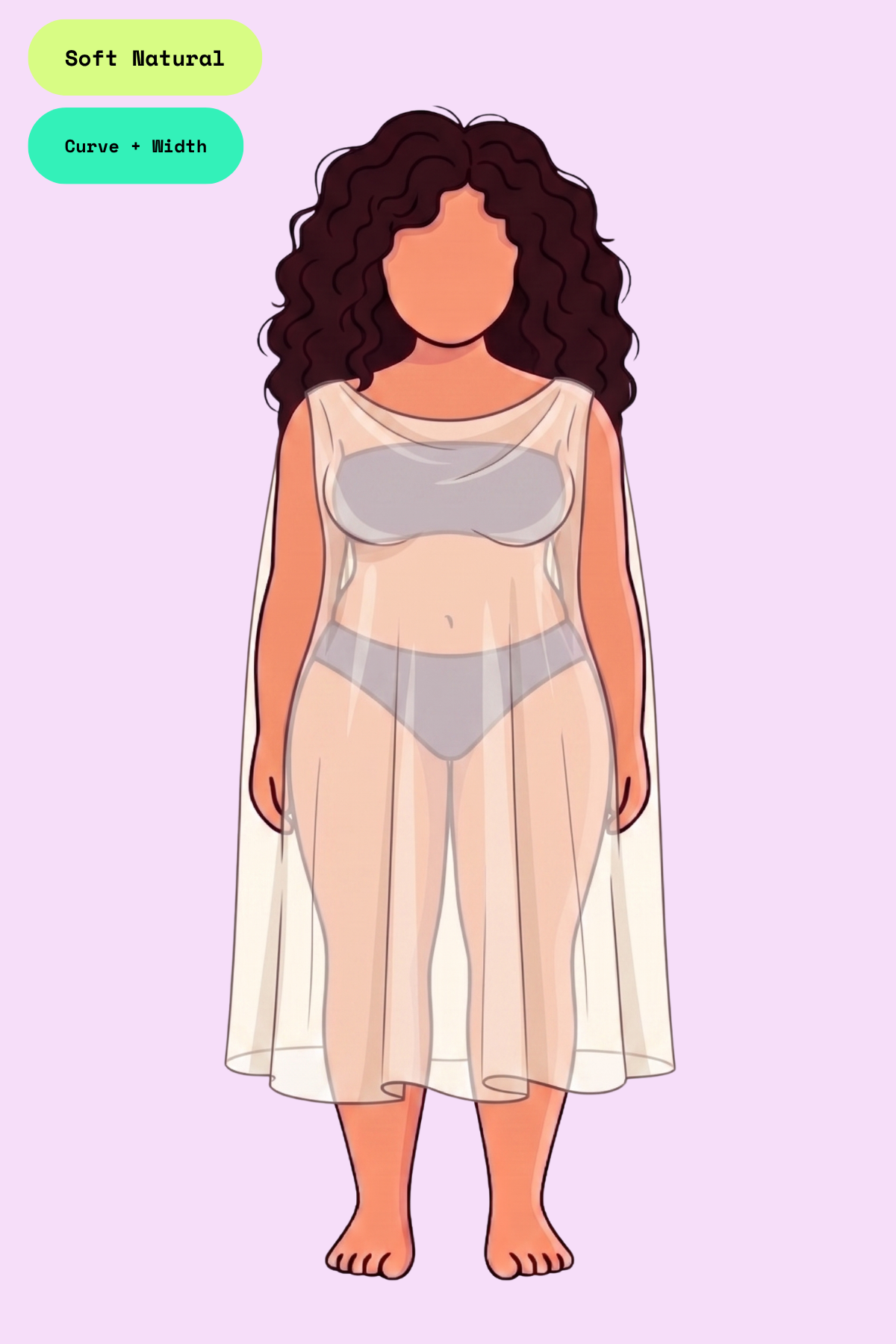
To define your Personal Line, you use a method involving imaginary fabric. Picture a length of silk chiffon, weighted at the bottom, hanging from your shoulders. As the fabric falls, you are watching its path to see if it drops in a straight line or if it is pushed outward by your bust and hips.
A straight fall from the shoulder indicates a Vertical Dominant. If the fabric expands at the bust, narrows at the waist, and expands at the hips, your Dominant is Curve. This fabric is not a literal outline of your body, nor is it pulled tight against you; instead, it skims your frame as it falls from the shoulder to reveal your Dominant trait.
How to Do the Sketch
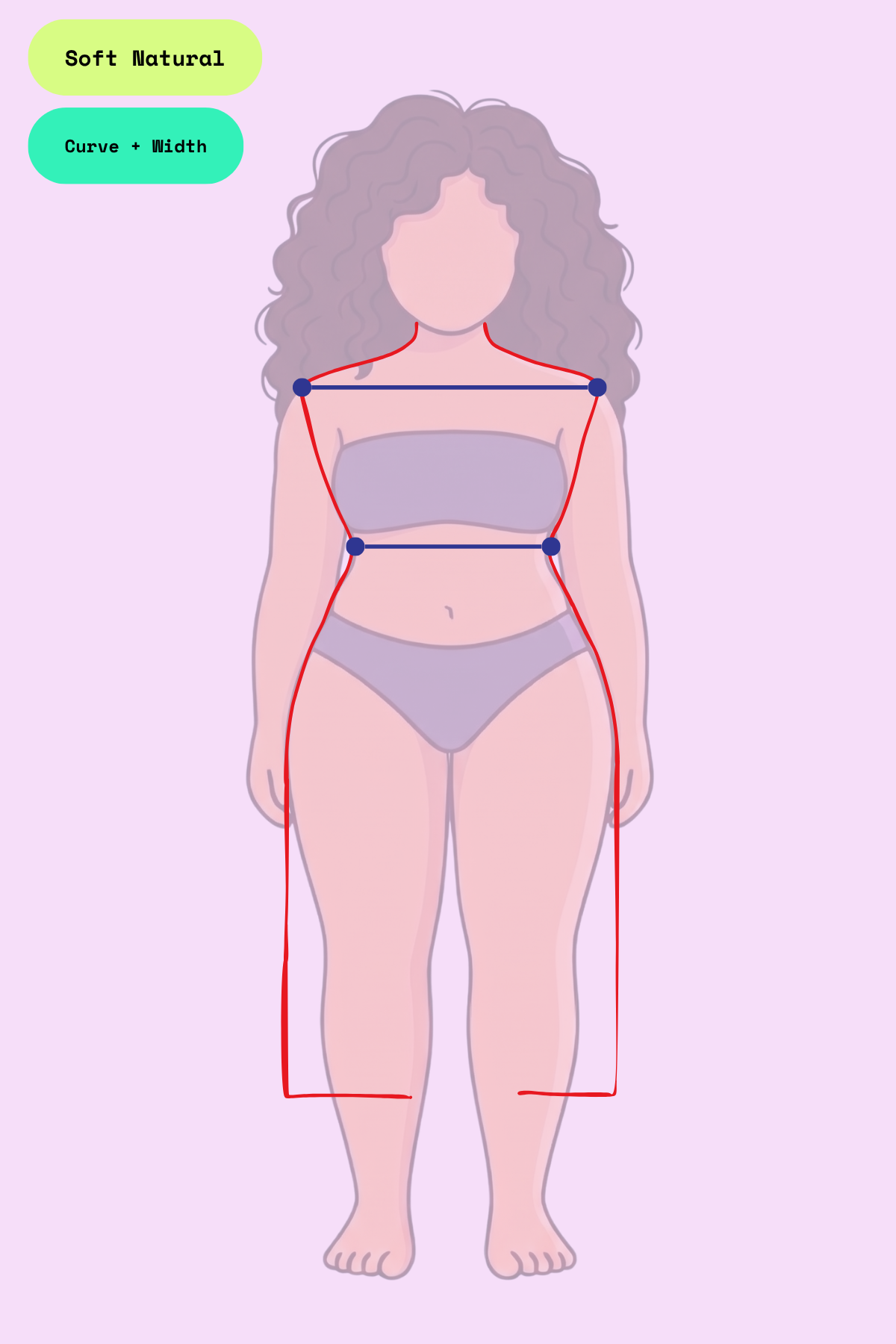
The Personal Line is defined in practice by drawing that imaginary drape directly onto a photo of yourself. You’ll need a full-length, front-facing photo taken in form-fitting clothes while standing in a relaxed pose with your arms at your sides. For accuracy, set the camera about ten feet away at chest height and avoid using a mirror.
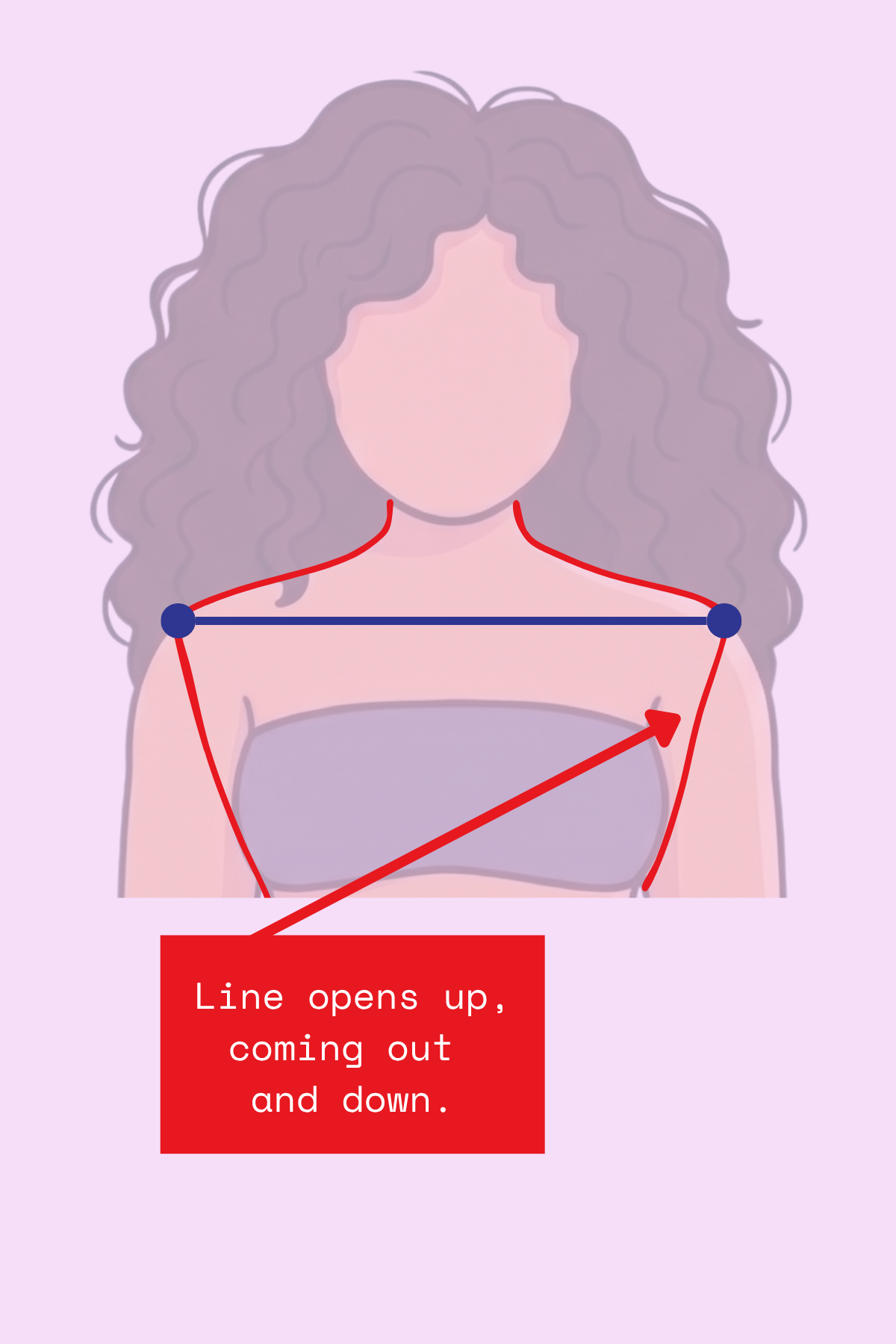
On the photo, sketch the path the fabric takes as it falls, starting at the edge of the shoulder where it meets the upper arm. A straight downward line is a Vertical Dominant, while a line pushed outward by the bust and hips is a Curve Dominant.
It is important to trust only what the sketch shows rather than returning to your body to confirm the results. Height also plays a rule: at 5'6" or over, the Dominant is automatically Vertical. Under that height, both Dominants are possible, though Curve dominant only appears under 5'6". Once the Dominant is set, the Additional trait is sketched on top to complete the Personal Line. This combined sketch then serves as the foundation for your Complementary Silhouette.
The Soft Natural Image Identity
Soft Natural is an identity defined by Yang with a pronounced yin undercurrent. Its Personal Line consists of Curve plus Width, and height is typically under 5'6". The resulting silhouette features breadth through the upper back and shoulders, then moves fluidly around the body's curves. Any flow or drape in the clothing should reveal the curves without feeling stiff, tight, or overly fussy.
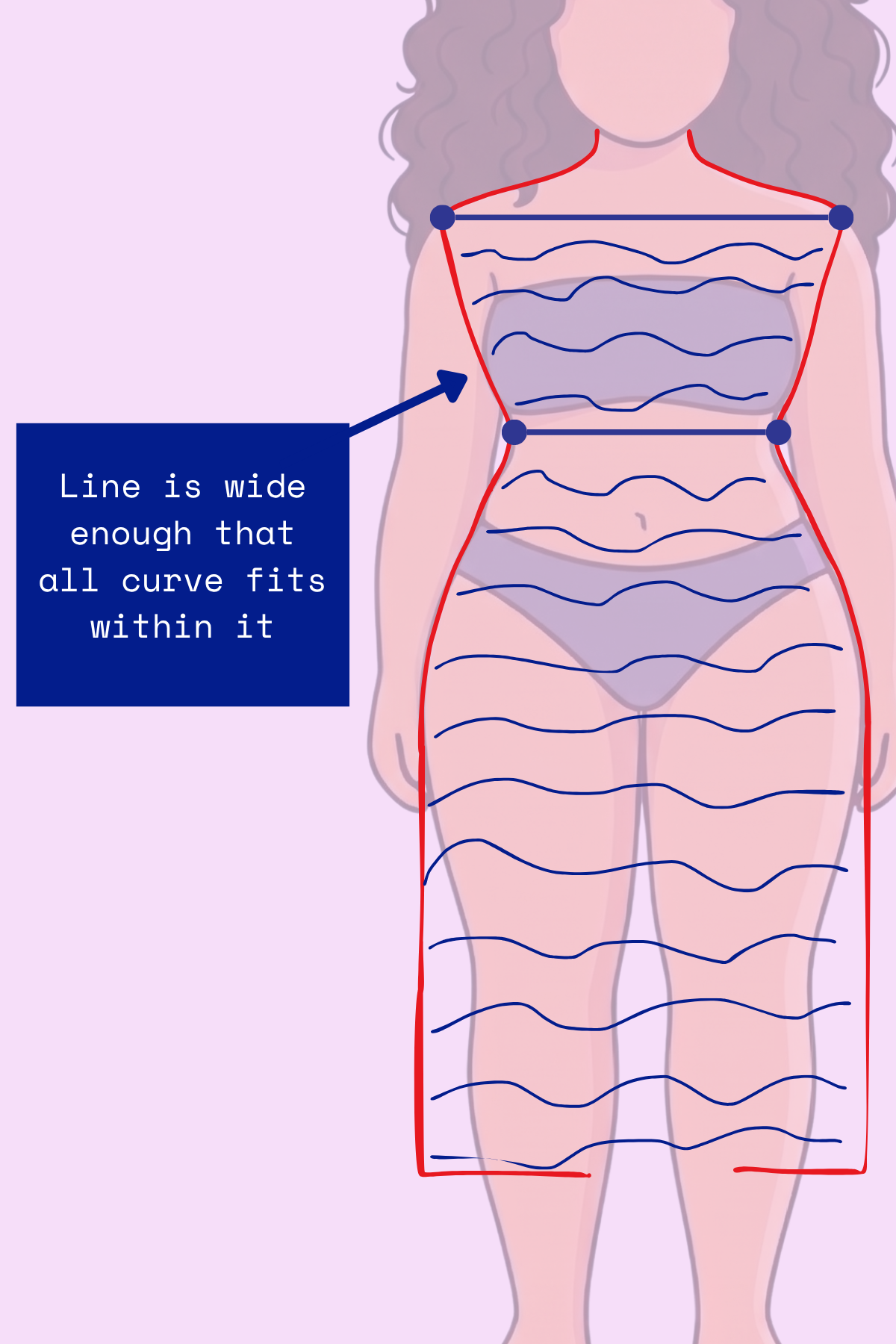
In the drape method, the imaginary fabric is pushed out by the bust and hips, while the upper portion of the outline shows breadth through the back and shoulder area. This reflects the Dominant trait of Curve—the outward push—and the secondary trait of Width, which adds proportionate breadth to the upper torso.
Reading Curve Dominance in the Sketch
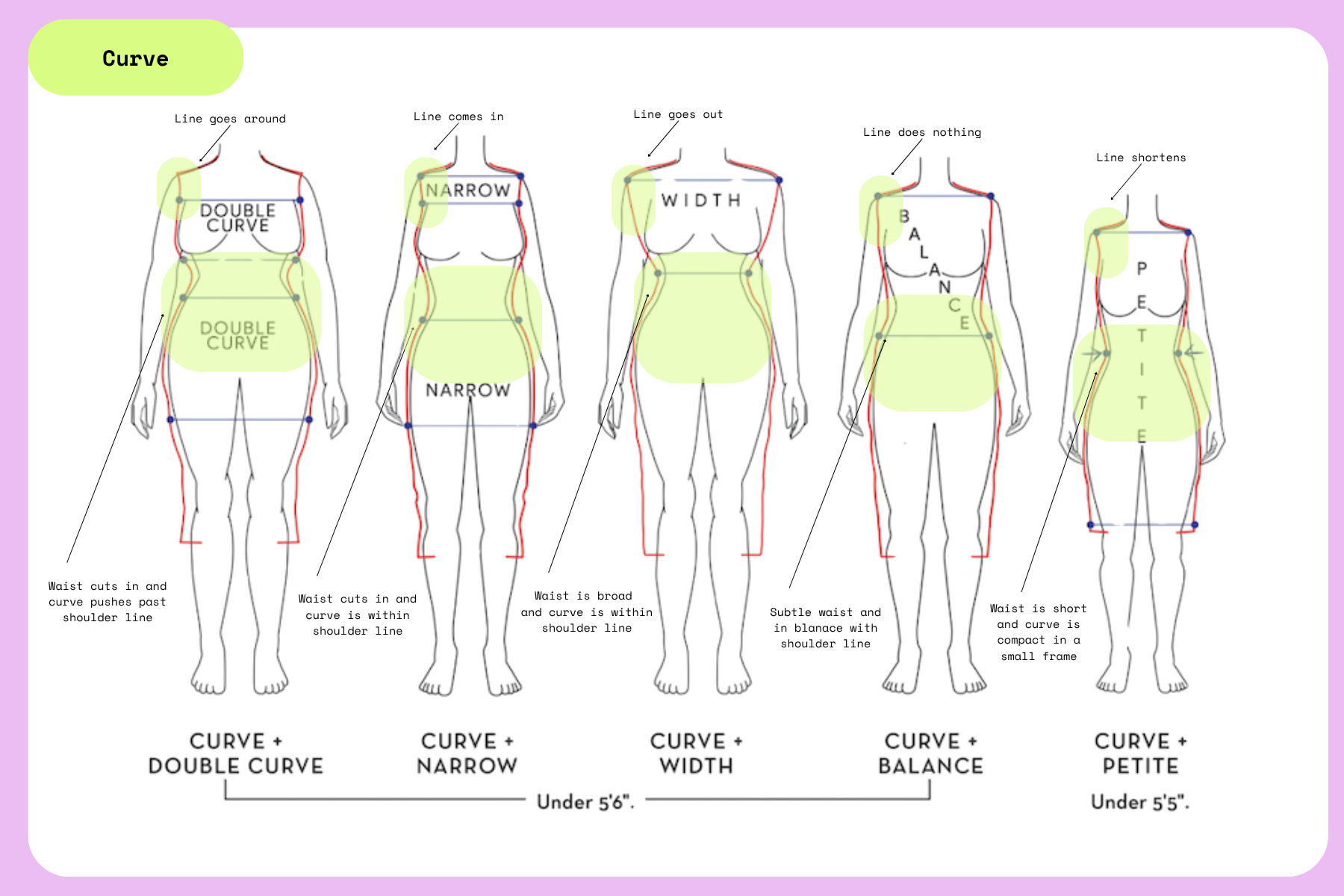
This is personally theory, but I think there are two areas of the Curve sketch provide the most information: the shoulder line and the waist leading into the upper hip. Each of the five Curve Image Identities reads these areas differently:
• Romantic: The line moves around the curves with a sharp cut at the waist, and the bust curve extends past the shoulder line.
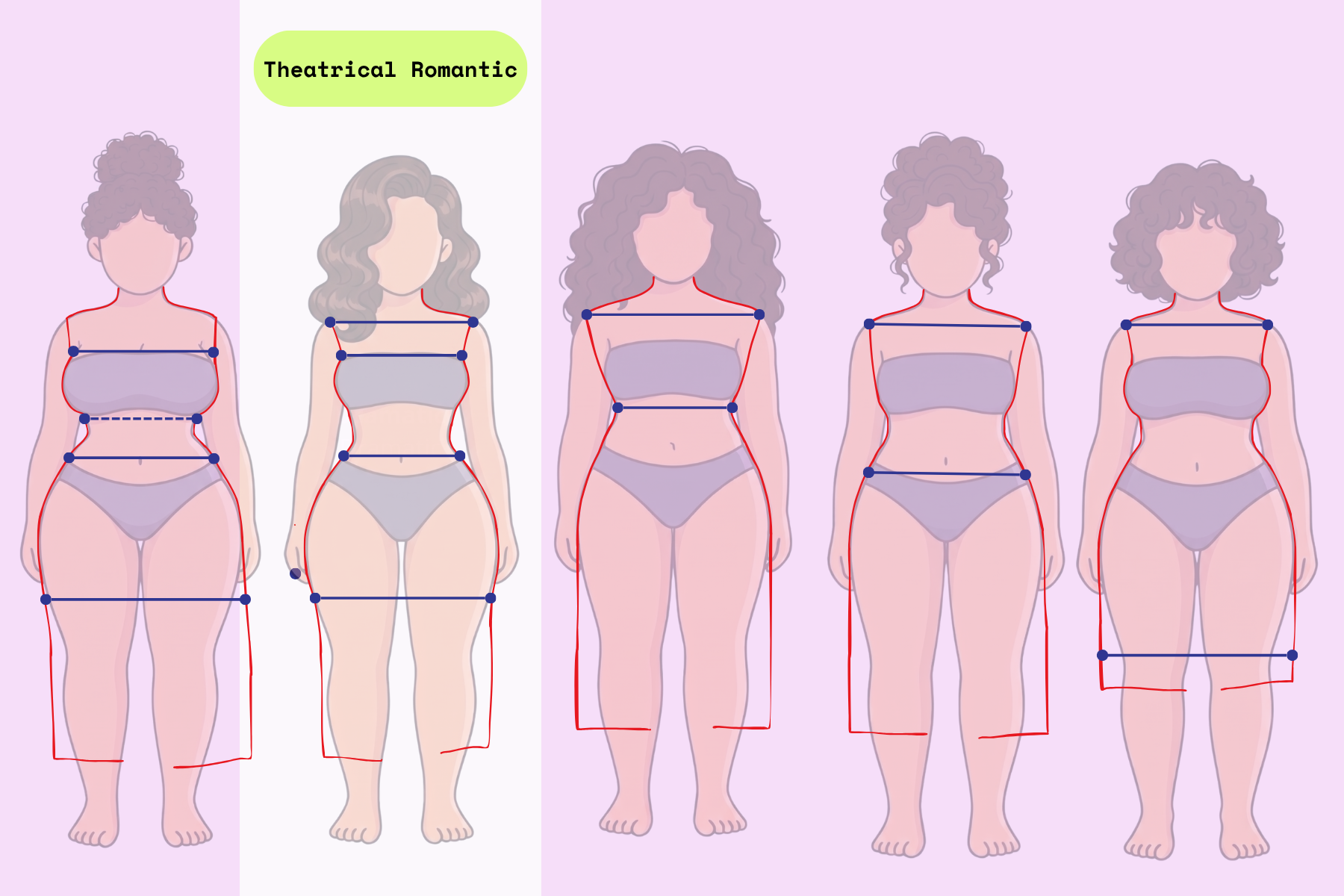
• Theatrical Romantic: The shoulder line narrows inward, the waist cuts in, and the curves are contained within the shoulder line.
• Soft Natural: The shoulder line moves outward, and the bust and hip curve sits comfortably inside that wider shoulder line.
• Soft Classic: The shoulder line remains neutral, the waist is gentle, and the top and hip stay balanced with the shoulders.
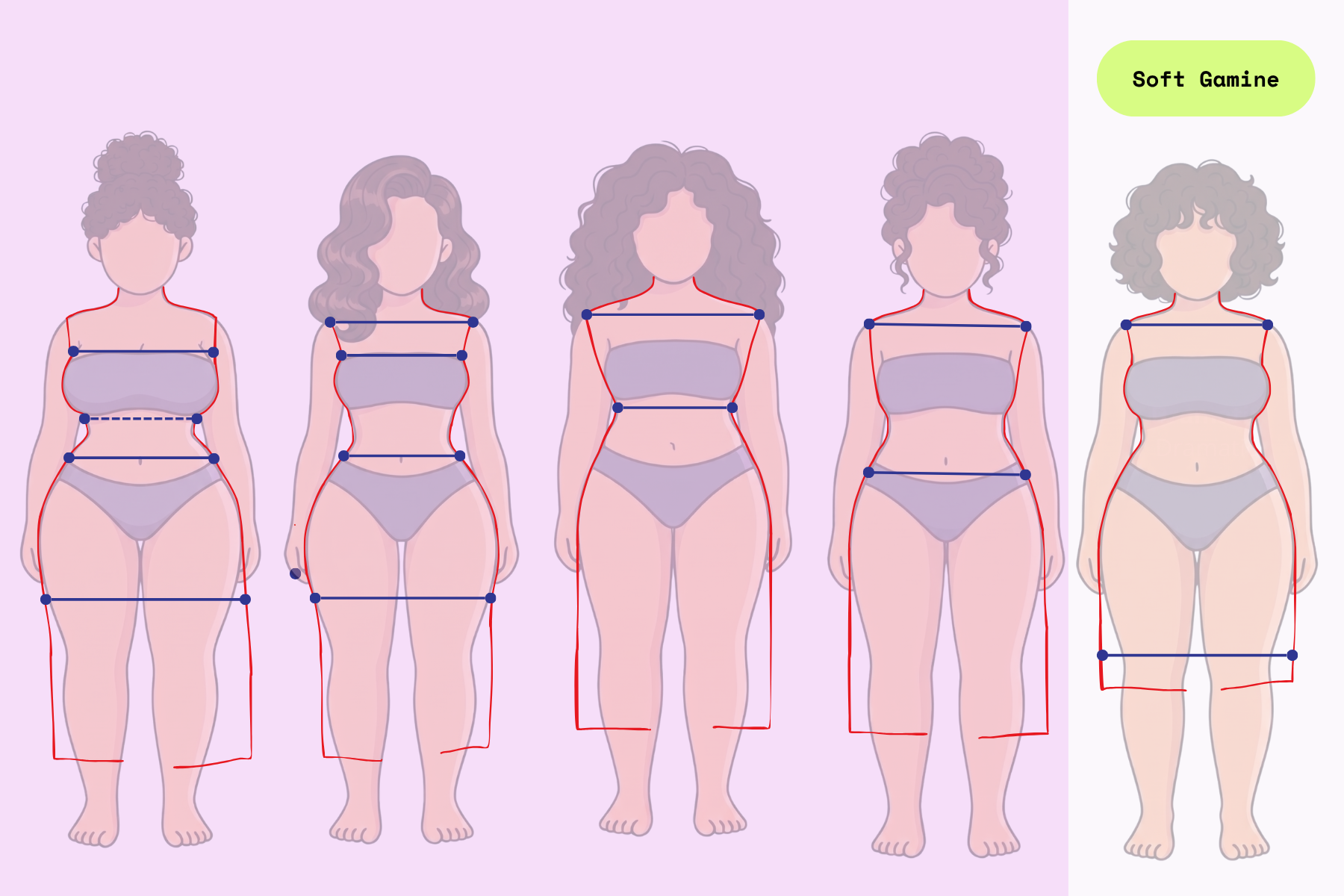
• Soft Gamine: The shoulder line is shortened, and the curve is compact and held within a small frame.
The Soft Natural Sketch
A Soft Natural sketch is read primarily through the shoulder line, the curves, and the waist. The line moves outward from the shoulder dot, creating a wide frame that allows the bust and hip curves to fit comfortably inside that width.
Because the shoulder line is broad and the lower curves stay within it, the waist also reads as broad rather than being pulled in sharply at the middle. While the body's curves are still present, they remain contained within this wider, more open frame, which defines the Soft Natural silhouette.
The Seamstress Lens
From the perspective of a seamstress, fitting a garment to Soft Natural proportions requires creating space at the top. She would pull both shoulder dots outward and do the same at the upper torso to widen the frame. At the waist, she would avoid pulling the fabric tight; instead, she would shift it inward with a relaxed stretch to suggest a shape without forcing one.
For more on this perspective, see A Seamstress Walks Into a Bar.
Other Ways to Discover Your Kibbe Type
While the fabric drape and sketch method is David Kibbe's current approach, several other methods can also lead you to your type. The earliest was the quiz, which used questions about bone structure, flesh, and facial features. This was followed by asking online communities for feedback. I then developed the photo analysis tool, which uses computer vision to read proportions from a photo.
I later updated to the current approach by adding 3D body mapping, sketch output, and virtual try-ons to show how different clothes look on your frame. Give it a try today!
Related Articles

How to Know If You Are a Soft Natural Kibbe: A Complete Guide to the Approachable Body Type
Welcome to the enchanting world of the Soft Natural. Kibbe body type, where femininity meets effortless charm. With their soft and approachable features, including gently rounded curves and a fresh,...
How to Do the Kibbe Personal Line Sketch for Theatrical Romantics
Information for this guide comes from David Kibbe's book The Power of Style. The book introduces the updated process for finding your Image Identity, which now includes the Personal Line.The Image...
How to Do the Kibbe Personal Line Sketch for Soft Gamines
This guide is built on David Kibbe's book The Power of Style, which walks through the updated approach for finding your Image Identity using the Personal Line.The Image Identity FormulaImage Identity...