Short answer: The Kibbe system groups people into style categories, called Image Identities, based on how much Yin (soft, curved) or Yang (sharp, angular) is present in their bone structure, body flesh, and facial features. It originally recognized 13 types; the three "pure" balanced types (Natural, Classic, Gamine) have since been retired, narrowing today's system to 10 types across 5 families: Dramatic, Natural, Classic, Gamine, and Romantic. Knowing your type means you can dress in harmony with your natural lines, making you the most conventionally attractive you can be.
Before Kibbe: How Style Advice Worked
The idea that you can read useful information off a person's body and face is old, really old. Hippocrates laid the groundwork around the 5th century BCE with the Four Humors: physique and complexion as visible symptoms of an internal balance of four bodily fluids. It was medicine, not style, nobody was choosing an outfit based on their humors. A few centuries later, Galen formalized it into four fixed temperaments, each bundled with its own build and coloring: Sanguine, Choleric, Melancholic, Phlegmatic. That's the real hinge point, the first "look at the body, get a type" framework, and the shape it created, a small number of fixed types, each with a physical bundle attached, is the direct structural ancestor of nearly every style-typing system that came after it.
In 1940, psychologist William Sheldon narrowed the body itself down to three builds: ectomorph, mesomorph, endomorph. He also tried to link body type directly to personality, a claim that's since been broadly discredited. What survived wasn't the personality theory, it was the three-category build vocabulary, which moved into fitness and bodybuilding rather than style.
The direct ancestor of Kibbe's own family names showed up in 1956, in a college home-economics textbook. Harriet Tilden McJimsey's Costume Selection (revised in 1963 and 1973 as Art and Fashion in Clothing Selection) introduced six yin/yang archetypes: Dramatic, Natural/Athletic, Classic, Romantic, Gamine, and Ingénue, read from build, facial features, coloring, posture, voice, and mannerisms together. It was coursework, not a consumer book, which is a big part of why most people have never heard McJimsey's name even though five of Kibbe's own family names are sitting right there in her 1956 textbook.
Kibbe wasn't the only one building on that foundation. Around the same time, in the late 1980s, image consultant John Kitchener developed the Kitchener Essence system out of an idea from Joan Songer: seven essences along a yin/yang spectrum, leaning heavily on the face, typically assigned as a percentage blend rather than a single fixed type. Kitchener typing was, and still is, done in person only, which kept it accessible mainly to people who could afford a private consultation.
What set Kibbe apart wasn't a new idea, it was the format. Where McJimsey lived inside a classroom and Kitchener required an in-person session, David Kibbe published his framework as a book anyone could buy and self-administer. Same five core families as McJimsey's textbook, minus Ingénue. David created a self-administered quiz instead of coursework or a consultant's eye. That's arguably the biggest reason Kibbe outlasted and outgrew the systems he drew from: it was the first version of this lineage anyone could actually do themselves, at home, from a book.
The Origin: David Kibbe's Metamorphosis (1987)
David Kibbe was working as a stylist in New York when he published David Kibbe's Metamorphosis in 1987, though he's always preferred a different title for himself: Image Professional. That distinction runs through the whole book. Most people call what he built a "body typing system," but Kibbe has pushed back on that framing from the start. To him, the result isn't a body type but an Image Identity, and finding it is meant to be a discovery: something you uncover about yourself rather than a label someone hands you or a box you get filed into. The original book has been out of print for years and now sells secondhand for hundreds of dollars, but the full text is free to read on the Internet Archive.
The book's Foreword opens by critiquing conventional beauty standards that demand conformity and "correction" of perceived flaws, drawing inspiration instead from the "heyday of the old Hollywood studio system," when beauty was treated as an art form that enhanced each actress's individual qualities rather than a standard everyone was measured against.
Chapter 1 lays out the actual method as a sequence of steps: analyze your physical characteristics objectively, identify your personality "essence," translate both onto a Yin/Yang scale, arrive at an Image Identity, give it a descriptive name, then build a "Total Look" that expresses it through hairstyle, makeup, clothing, and accessories. The goal, in Kibbe's own framing, is a "richly woven tapestry" that integrates your outer appearance with your inner spirit, not a costume that hides it.
Chapter 3 is the quiz itself, split into five categories: bone structure, body type (flesh), facial bones, facial features, and hair. Your answers place you on the Yin/Yang scale, which resolves to an Image Identity Theme. There's also a second, less-discussed piece: a "Fantasy" quiz meant to surface hidden desires tied to different Image Identities, so the outer physical read gets checked against what you actually want to look like, not just what your bone structure says you are.
Chapter 4 works through all 13 Image Identities, grouped into the same 5 families the system still uses today, each with its own personality read, physical profile, and guidance on clothing, makeup, and hair. Want the full chapter-by-chapter breakdown? Read the complete Metamorphosis summary.
The Foundation: Yin and Yang
Where It Comes From
Yin and Yang predate David Kibbe by thousands of years. The idea comes from ancient Taoist philosophy in China, where it describes two complementary forces running through everything in nature, Yin soft and receptive, Yang active and assertive. Kibbe saw these forces in the body, and named them. He wasn't starting from nothing, Harriet Tilden McJimsey had already been reading Yin and Yang off build and features back in 1956, but Kibbe took her language and ran with it: a full read of bone structure, flesh, and facial features, translated into his own thirteen Image Identities.
The Bouba/Kiki Effect
A simple way to visualize Yin and Yang before you ever get to bodies are the shapes for the "bouba/kiki" effect, a well-documented finding in psychology where people across languages and cultures consistently match the made-up word "bouba" to a round, blobby shape, and "kiki" to a sharp, spiky one. Nobody has to explain why, the roundness of "bouba" just feels soft, and the hard consonants of "kiki" just feel sharp.

Bouba → Yin

Kiki → Yang
Words for Yin, Words for Yang
A common understanding of Yin and Yang is feminine and masculine energy. Kibbe doesn't use these terms in relation to gender. A fun note here: David Kibbe himself identifies as a Theatrical Romantic, an extreme-Yin type, and he's a man.
That said, a lot of the common word associations with Yin and Yang, even inside Kibbe's own work, can stir something in the reader. A Flamboyant Natural type is very Yang and has width, and sitting with words like "big" or "boyish" or "sharp" is a genuinely hard thing to confront. But confronting that discomfort is the point, it's what Kibbe actually asks of readers (more on that when we get to the 2025 book). These word lists aren't a verdict on who you are, they're just here to show the opposite ends of a spectrum.
Yin
- Soft
- Curved
- Rounded
- Romantic
- Girlish
- Small
- Dainty
- Delicate
- Sweet
- Ornate
- Lush
- Innocent
- Flowing
Yang
- Sharp
- Angular
- Elongated
- Dramatic
- Boyish
- Big
- Athletic
- Powerful
- Bold
- Strong
- Wide
- Flamboyant
- Structured
How Kibbe Uses This
Every Kibbe type is really just a position on that single spectrum, how much Yin versus Yang shows up in your bone structure, flesh, and features.
Kibbe breaks these into the 5 Kibbe Families:
| Family | Yin/Yang | Descriptors |
|---|---|---|
| Dramatic | Yang | Vertical, narrow, sharp, elongated, angular |
| Natural | Yang | Bold, blunt-edged, broad, relaxed, athletic |
| Classic | Balance | Balanced, symmetrical, tailored, restrained, refined |
| Gamine | Mixed | Small-scale, prominent, contrasted, playful, crisp |
| Romantic | Yin | Soft, lush, curved, rounded, delicate |
Let's take a look at either end of the spectrum. We'll start with Kate Moss.
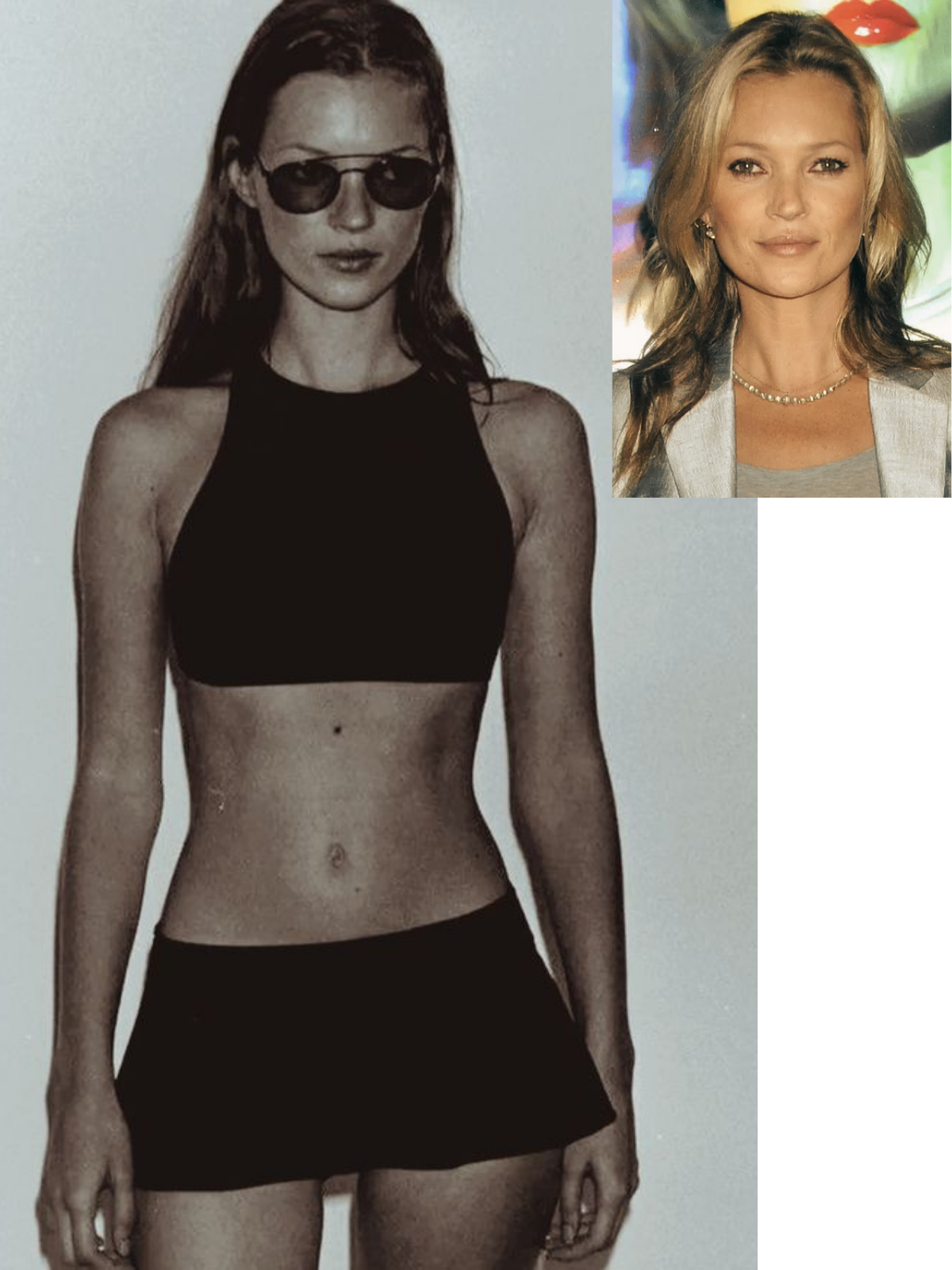
Kate has sharp, angular features from her jawline down through her shoulders, a flatness in her bust, and an angular waist. She has a sharp presence to her frame, and is nearly pure structure, Yang.
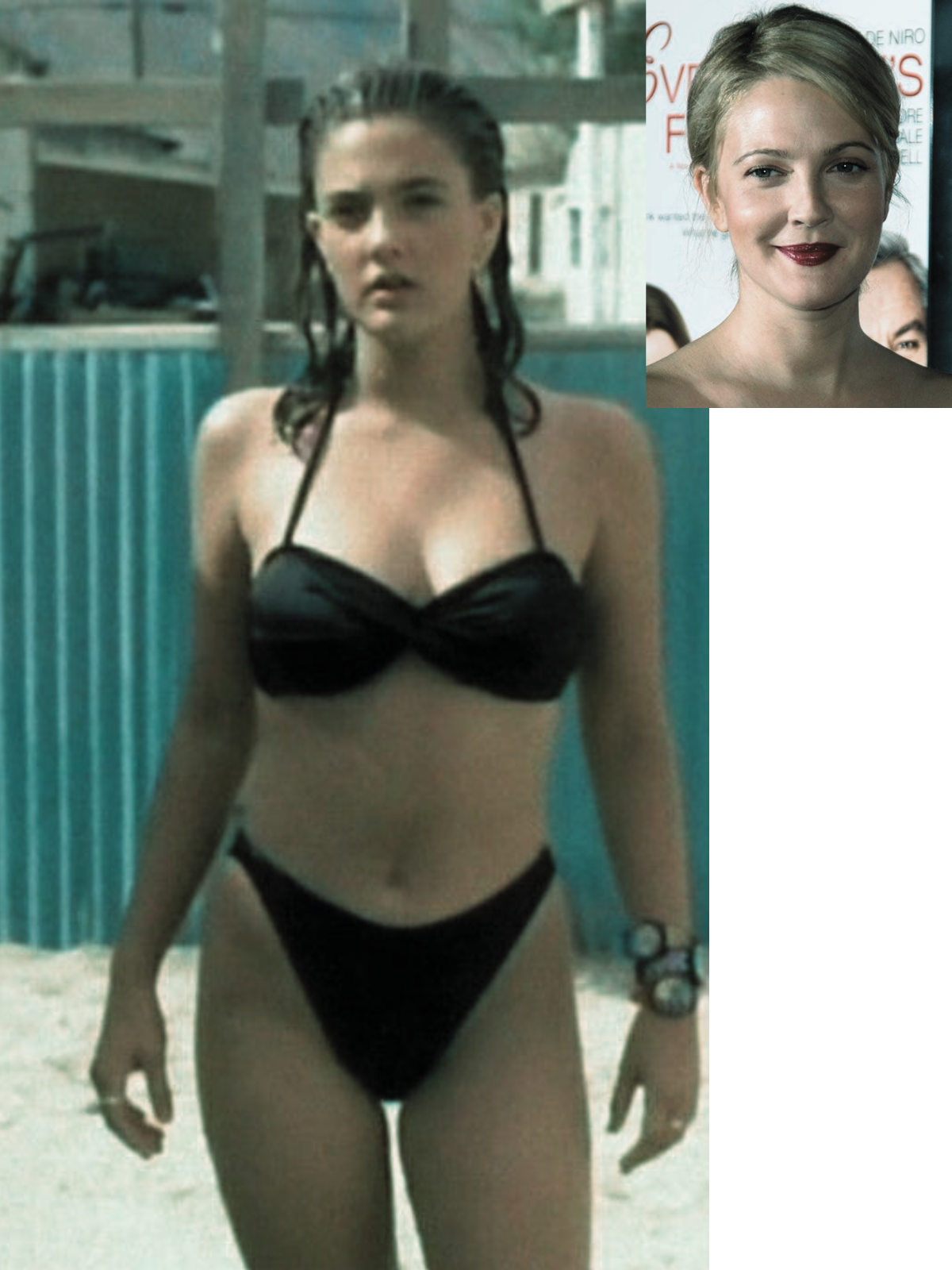
Compare that to Drew Barrymore, who has soft facial features, rounded shoulders, a lush bust, and a soft waist leading into the curve of the hip. She sits at the opposite end of the spectrum from Kate, nearly pure softness, Yin.
When Metamorphosis first released, each family had a pure type. To get a feel for the Yin/Yang element within each family, it helps to look at celebrities David originally marked as a pure type.
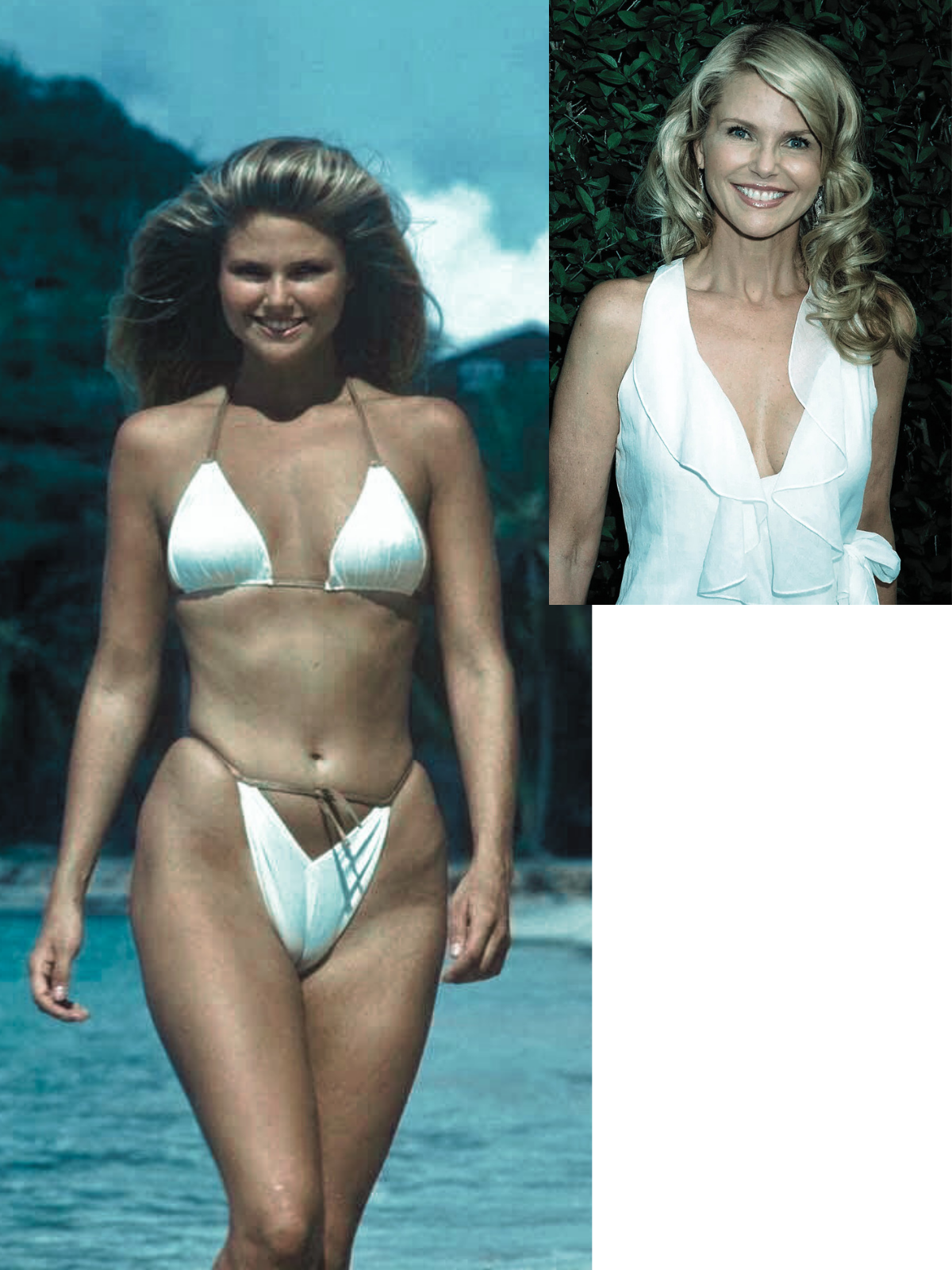
Christie Brinkley, originally marked Pure Natural, later updated to Flamboyant Natural. You can see it in her blunt shoulder line, wide cheek structure, and athletic build.
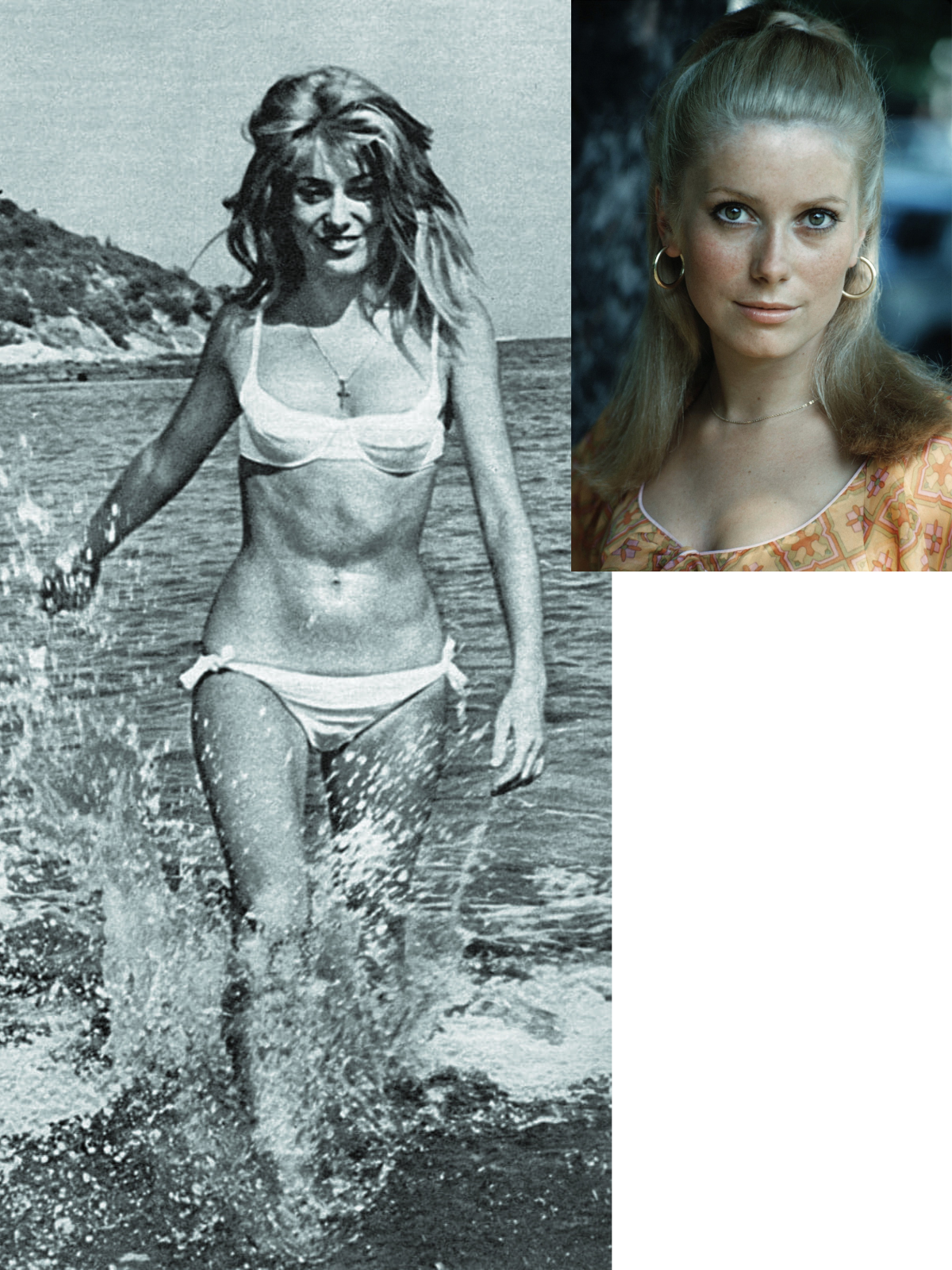
Catherine Deneuve, originally marked Pure Classic, later re-typed Soft Classic. The balance is especially noticeable in her facial features, almost nothing stands out. Her frame follows the same logic: shoulders and hips arrive at almost the same width, with nothing pushing toward fleshiness or sharpness in between.
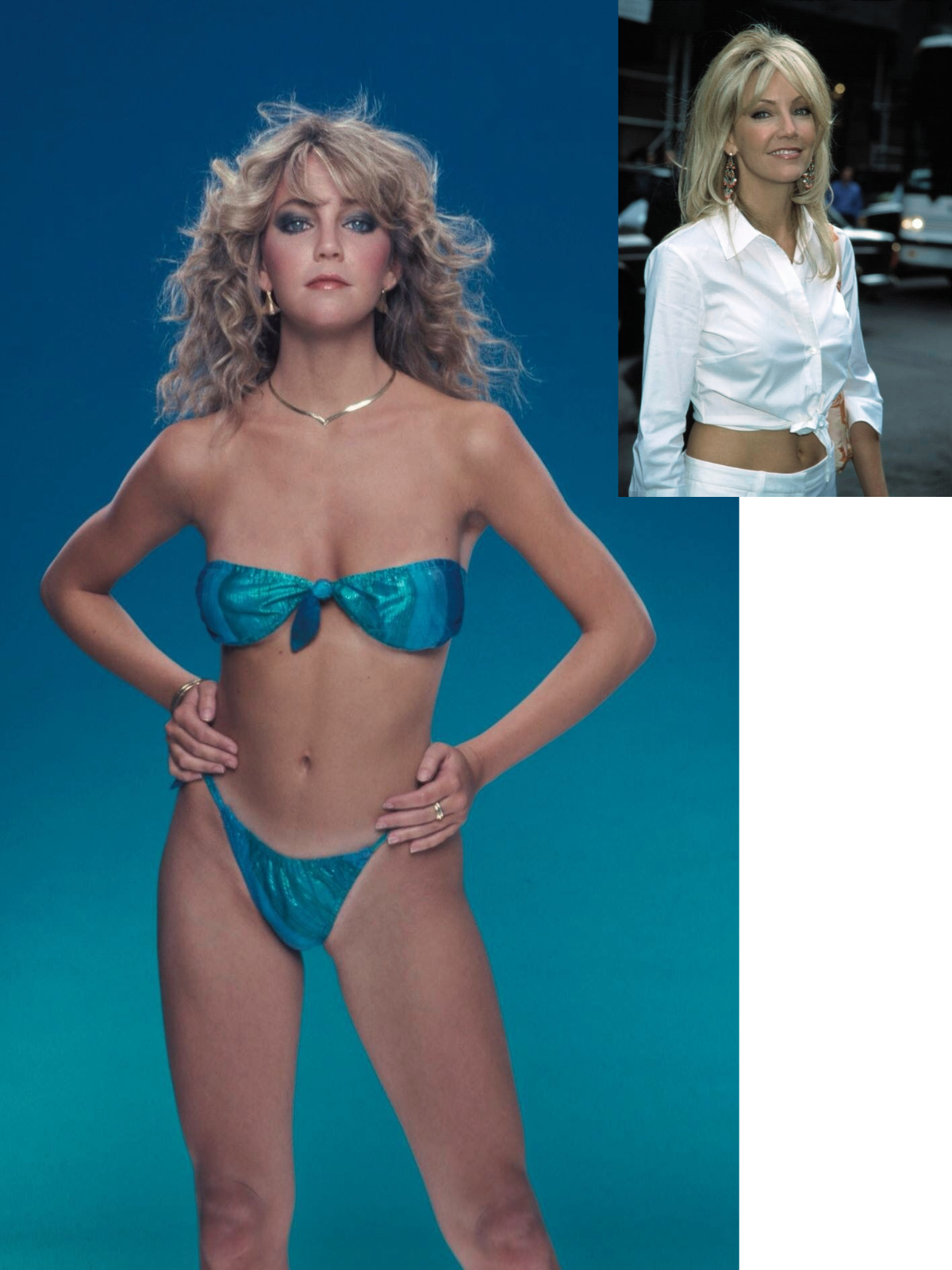
Heather Locklear, still marked Pure Gamine, hasn't been retyped. She isn't overly short, she stands 5'5", but everything about her reads in small scale. Her frame stays relatively straight, yet she carries some lushness in her bust and face, vertical, but with very soft features, a glimpse of exactly the Yin/Yang mix Gamines are known for.
How They Interact
Once you know the 5 families, every other type is just two of them blending together, one dominant, one an undercurrent. Here's each subtype's blend, and what that combination actually looks like on a body.
| Subtype | Blend | What You'll See |
|---|---|---|
| Soft Dramatic | Dramatic + Romantic | The elongated features of Dramatic, often with some sharpness, while the Romantic Yin comes through in the bust, hip, and often rounded shoulders. |
| Flamboyant Natural | Natural + Dramatic | The broad, blunt-edged frame of Natural, especially through the shoulders, chest, and torso, with Dramatic's Yang showing up as extra length and a sharper edge to the features. |
| Soft Natural | Natural + Romantic | The relaxed, broad-shouldered frame of Natural, softened by Romantic's Yin through a fuller bust, hips, and a softer waist definition. |
| Dramatic Classic | Classic + Dramatic | Classic's even, symmetrical proportions, with Dramatic's Yang often appearing in the shoulders, or waist. |
| Soft Classic | Classic + Romantic | Classic's balanced, symmetrical frame, softened by Romantic's Yin into slightly rounded edges through the face and figure. |
| Flamboyant Gamine | Gamine + Dramatic | Gamine's small scale, sharpened by Dramatic's Yang into angular bone structure and straight, defined lines despite the petite frame. |
| Soft Gamine | Gamine + Romantic | Gamine's small, angular frame, softened by Romantic's Yin through fuller features and curvier proportions. |
| Theatrical Romantic | Romantic + Dramatic | Romantic's soft, full features and curves, with Dramatic's Yang adding a narrowness through the shoulders and waist. |
Another way to think about this is taking the pure types and adding either a drop of Yin or a drop of Yang to each. Soft Dramatic is Dramatic with a drop of Yin, whereas Theatrical Romantic is Romantic with a drop of Yang.
How This Translates to Style
Yin represents softness, curves, fluidity, and delicacy. Yang represents structure, sharp angles, straight lines, and boldness. Dressing in style means balancing these forces to match your natural physical traits and personal essence.
Yin Style Elements
- Shapes: Rounded edges, circles, flowing lines, and soft draping.
- Silhouettes: Hourglass outlines, fitted waists, and flared or swirled skirts.
- Fabrics: Lightweight, soft, silky, or sheer materials like velvet, jersey, and silk.
- Details: Ruffles, gathers, watercolor prints, and intricate patterns.
Yang Style Elements
- Shapes: Sharp angles, rectangles, triangles, and straight geometry.
- Silhouettes: Long vertical lines, stiff or boxy shapes, and elongated cuts.
- Fabrics: Heavy, structured, or stiff materials like leather, tweed, and heavy wool.
- Details: Crisp collars, sharp pleats, tailored lapels, and high-contrast or geometric prints.
Putting It Into Practice
Now that we know how style separates Yin and Yang, let's look at how each family would be styled.
The items below are references from our Look Book Library, a community collection of real clothing examples organized by Kibbe type.
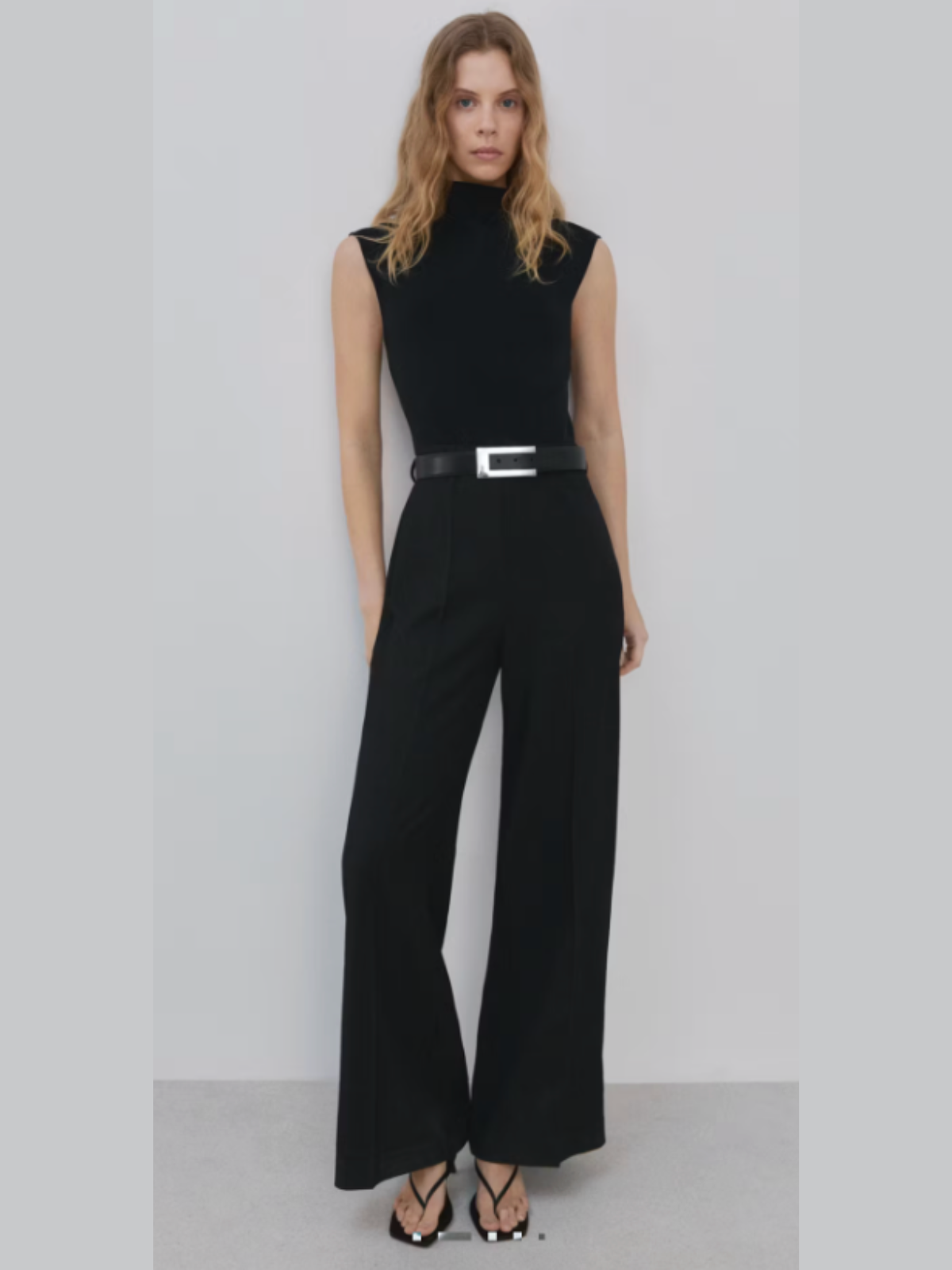
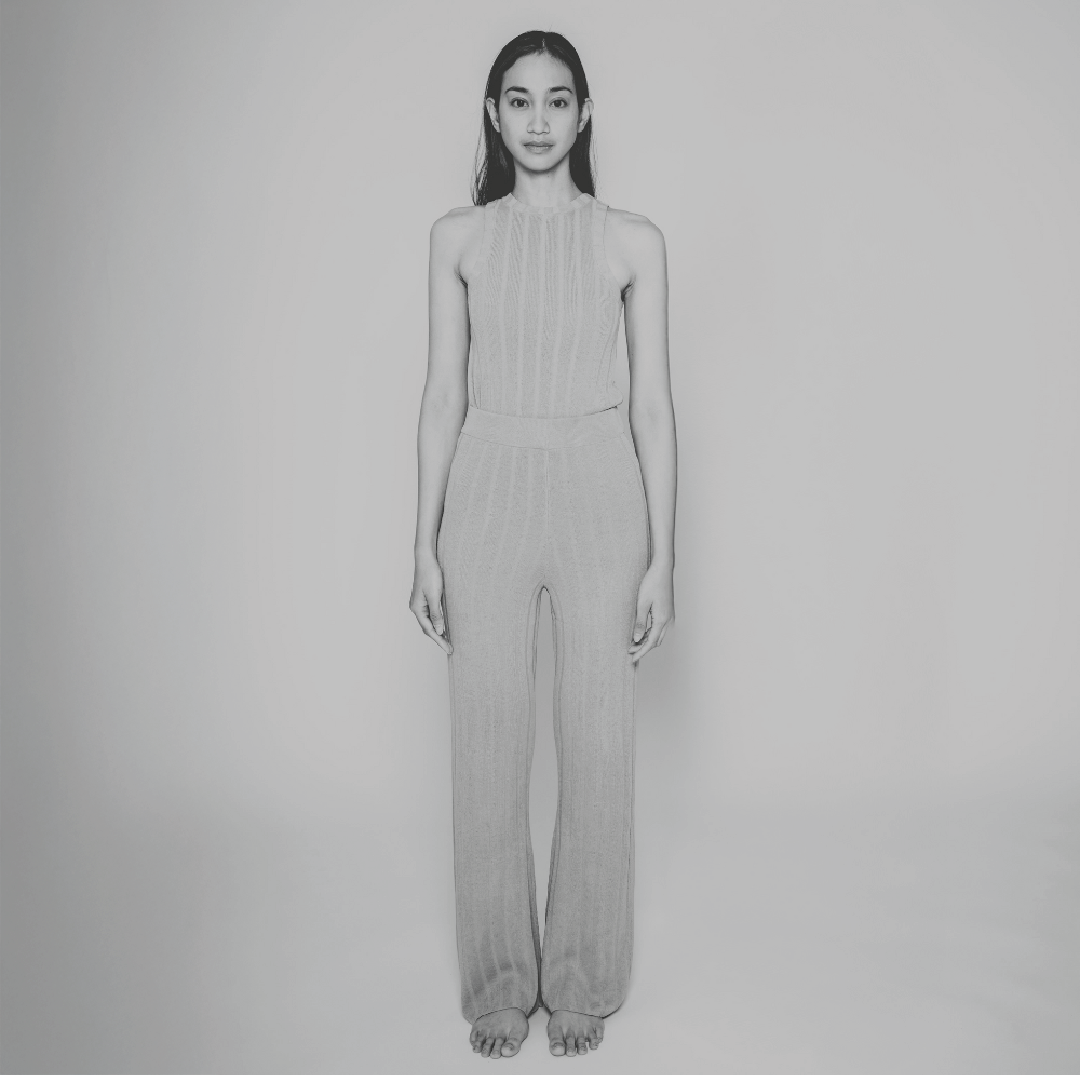
Dramatic: sleek and monochrome, a fitted top, a sharp belt, and wide-leg trousers that fall in one straight line.
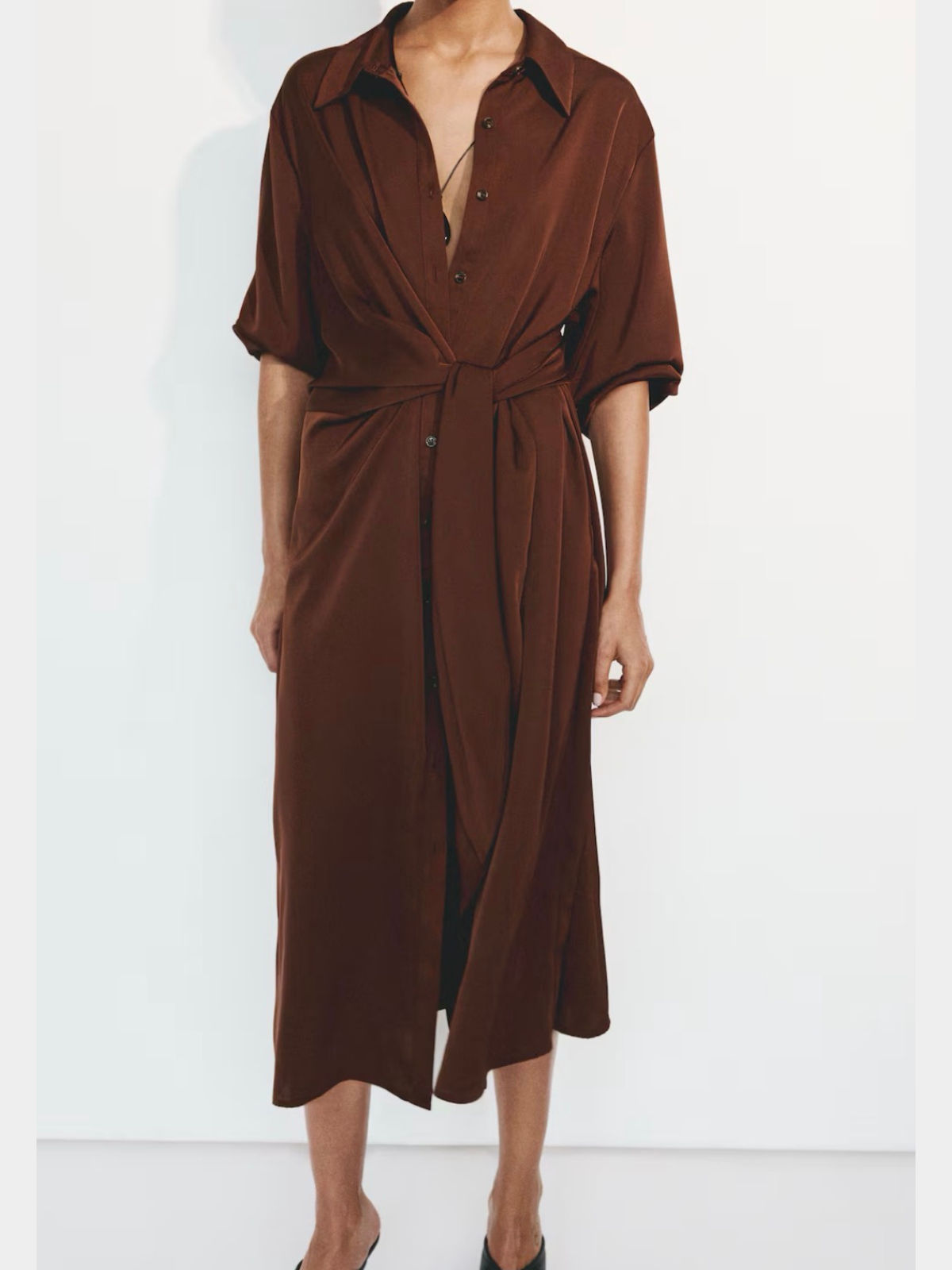
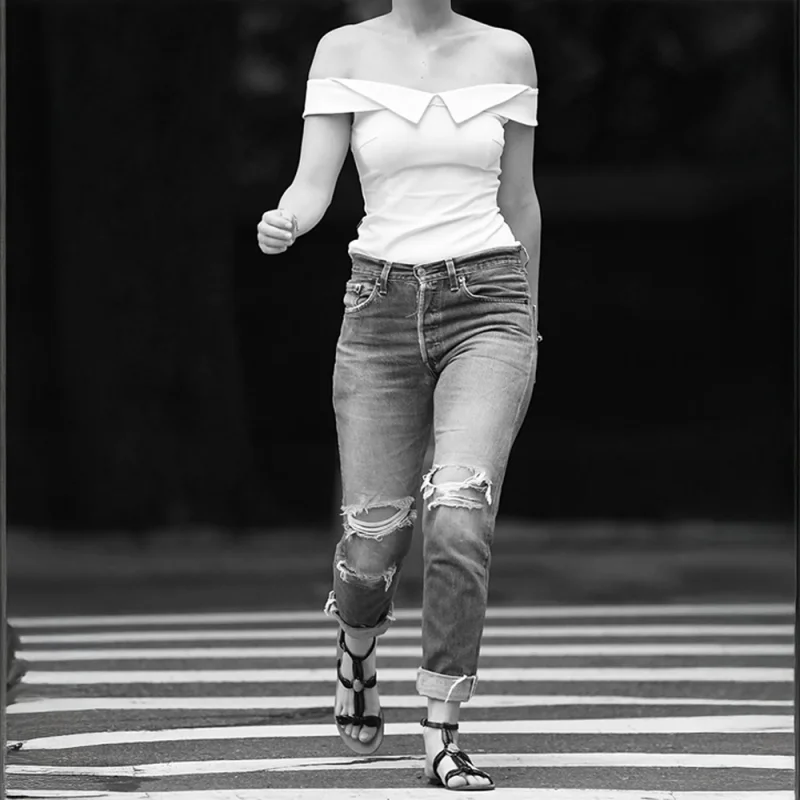
Natural: an open collar and loosely tied waist, room through the shoulders and torso, nothing fitted or fussy.
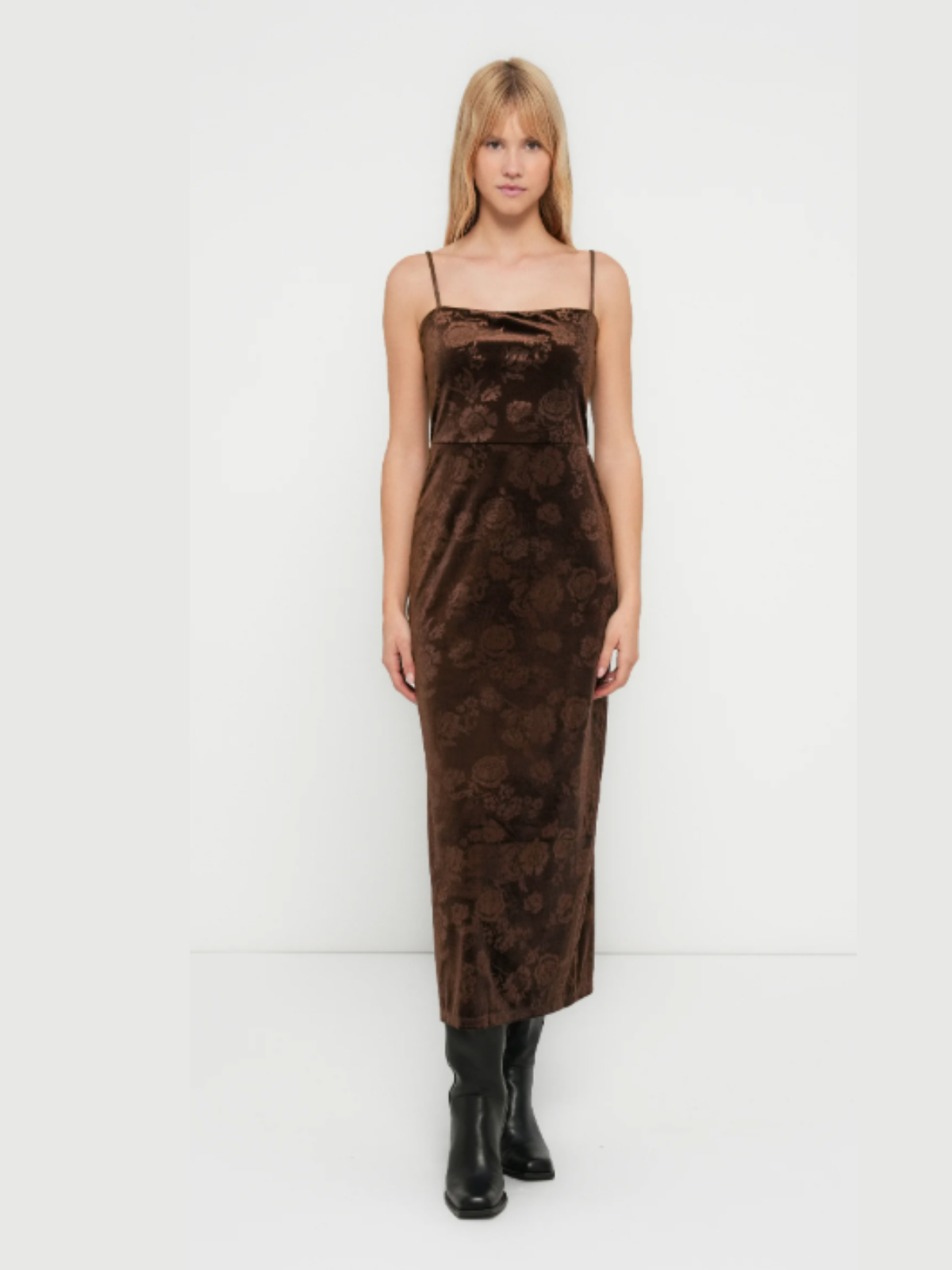
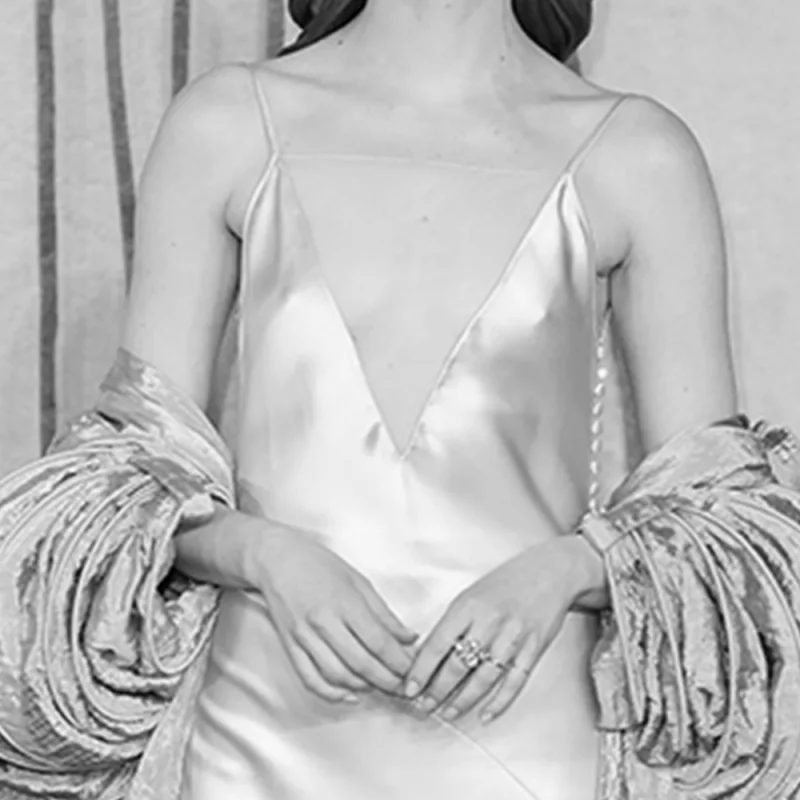
Classic: a simple column silhouette, thin straps, a subtle print, nothing reaching toward an extreme.
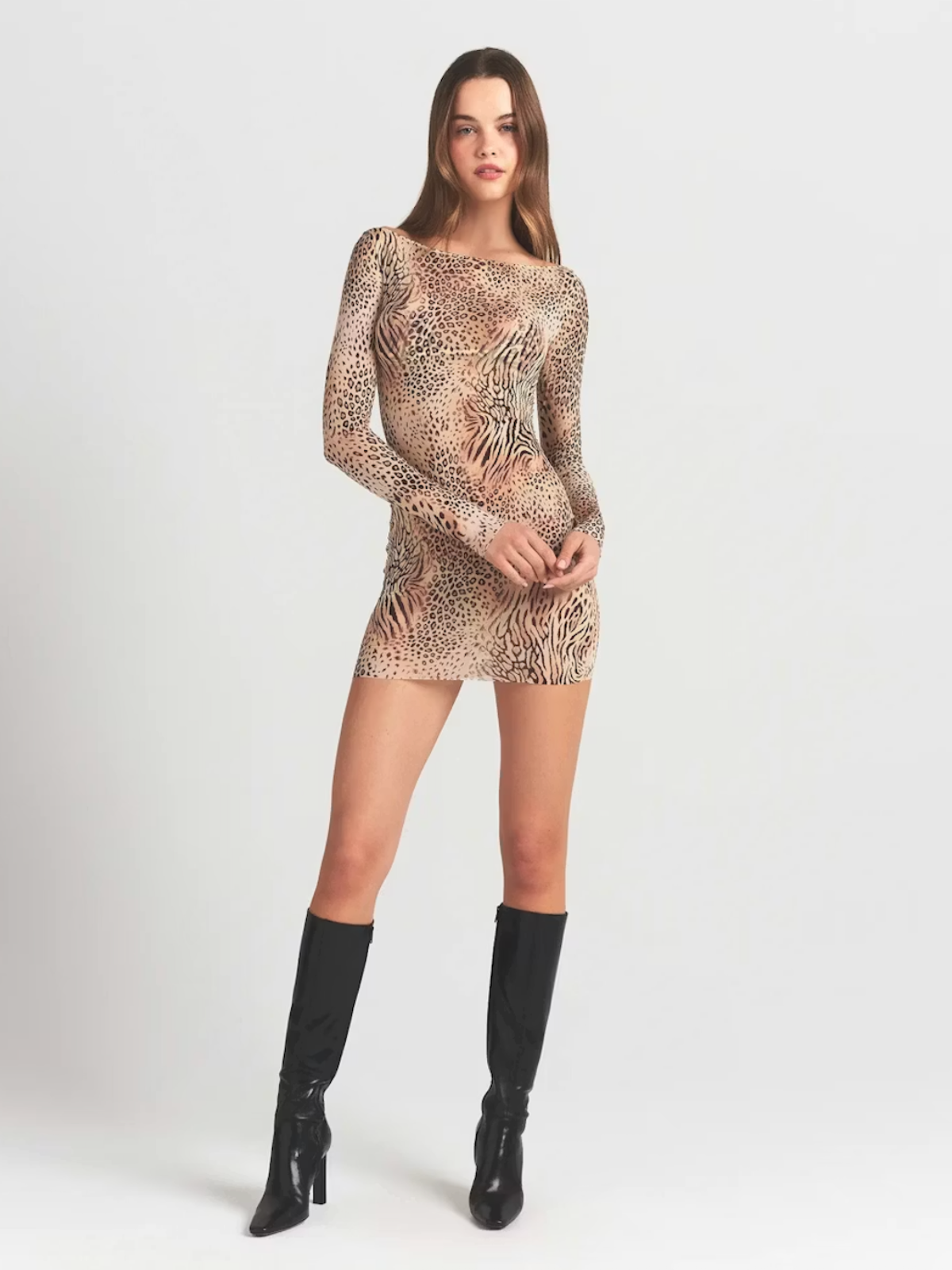
Gamine: short and body-skimming, with a bold animal print doing the work of a statement detail.
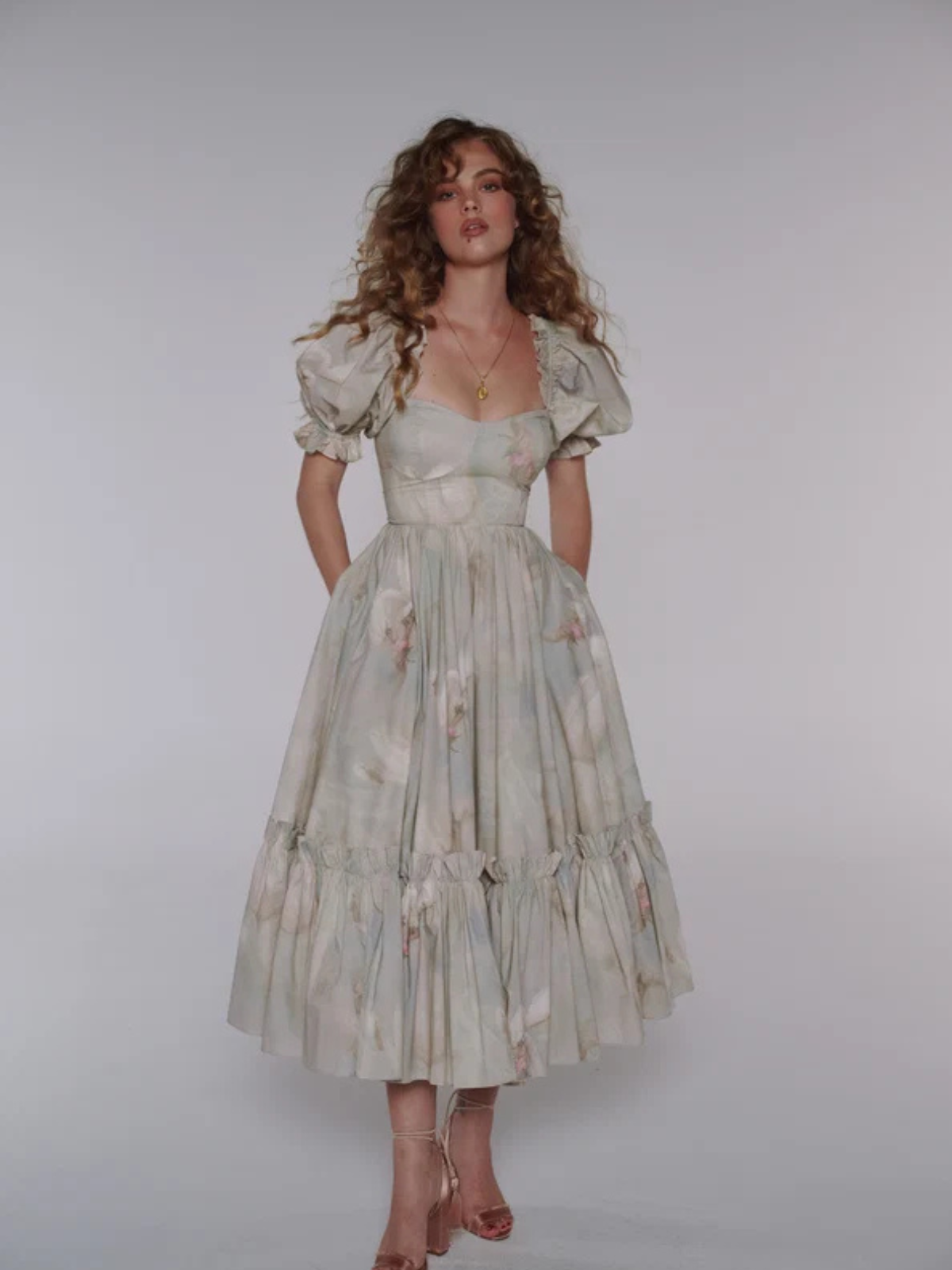
Romantic: puff sleeves, a sweetheart neckline, and a full, ruffled skirt in a soft floral print, the direct opposite of Dramatic's straight line.
We now understand the base of Kibbe and what was released into the world with Metamorphosis. But it didn't stop there.
The Quiz
Kibbe's attempt to find your Yin/Yang balance through a quiz worked by looking at the specific shape of 15 separate body features. The original 1987 quiz from Metamorphosis did this entirely in words, asking you to judge your own shoulders, jawline, or waistline as "sharp," "broad," "sloped," or "delicate," with nothing to actually compare yourself against. Readers filled that gap themselves. Hand-drawn charts, homemade image boards, and later full graphics started circulating, all trying to pin down what a "sloped and sharp" shoulder was really supposed to look like next to a "sloped and rounded" one.
Even with all that effort, the quiz was hard to decipher. Two results kept coming up far more than any of the others: Soft Classic and Theatrical Romantic, landing on people who, by every other read, weren't close to either one.
The quiz on this site fixes both problems. Every answer comes with its own image example, not just a word, so you're matching what you see instead of guessing what "sloped and sharp" means. And the questions aren't weighted equally anymore, the ones that actually move the needle on your type count for more than the ones that don't. Take the quiz.
The Digital Era
David was always popular in media, appearing in newspapers, on radio, and on TV well before the internet had anything to do with it. When the digital era took off, David launched his members-only Strictly Kibbe Facebook group, where he'd occasionally weigh in himself under his wife Susan Slavin's account. Around it grew an onset of blogs, Reddit communities, and YouTube breakdowns, all working through his system on their own, largely without his direct involvement. That groundwork later fed the TikTok boom that happened over COVID, racking up over 163 million views by early 2025.
The Purge of Pure
Thanks to the digital era, David was able to purge the pure types without releasing another book, the news spread like wildfire as everyone made the update. The original 1987 system included three "pure" balanced types: Natural, Classic, and Gamine, sitting at the exact center of their families with no secondary undercurrent at all. David retired all three, finding that almost no one who identified with a pure type actually fit it once you looked closely; they belonged to one of the adjacent subtypes instead. If you previously identified as one of the three retired types, the site (and David Kibbe himself) points you toward the closest subtype:
- Pure Natural → Flamboyant Natural or Soft Natural
- Pure Classic → Dramatic Classic or Soft Classic
- Pure Gamine → Flamboyant Gamine or Soft Gamine
That leaves 10 active types across the same 5 families. You'll still see references to "13 Kibbe types" across the internet, and to the original definitions themselves, since they're part of the system's history and useful for understanding how the current 10 evolved.
Online Buzz
Mainstream attention brought mainstream scrutiny. People picked apart David's own styling choices, questioned his credentials, and some accused him of making the quiz, and finding your Image Identity in general, deliberately difficult so people would keep talking about it. Others raised a fair point: a system built almost entirely around a narrow set of features and proportions, with little acknowledgment of how it holds up across different racial backgrounds. Kibbe had officially busted out of its niche, and the critique that came with it only added another layer of confusion for the people genuinely trying to find their Image Identity.
Celebrity Typing
People have always looked to the system's standard, celebrities, for answers. They were noted throughout Metamorphosis, and David kept retyping them all through the digital era. Jane Fonda was verified as a Natural in Metamorphosis, then re-typed twice through Strictly Kibbe: first to Soft Natural, then to Flamboyant Natural.
The pool of examples got more racially diverse too, with typings for women like Lucy Liu and Denee Benton, and it grew to include newer names like Ariana Grande and Sabrina Carpenter. Kibbe may have even tipped his hand on his politics along the way, typing both Jill Biden and Kamala Harris. Lately, David has moved away from celebrity typing and from celebrities as the system's standard, but you can still browse the current verified library anytime. Browse the Celebrity Library.
The 2025 Update: The Power of Style
David Kibbe's second book, The Power of Style (2025), doesn't touch the type system, it changes how you're supposed to arrive at your type in the first place. Its foundation is what Kibbe calls Love-Based Beauty: style built on self-love, self-acceptance, and self-celebration, instead of what he calls fear-based beauty standards. In this framework, your Image Identity isn't something you're assigned, it's something you arrive at only after working through your own Yin/Yang balance and Personal Line.
The DIY Method organizes that self-discovery around two things: your Season (what the book calls "your painting," the colors that harmonize with you) and your Image Identity ("your sculpture," the outlines that complement your build). Getting to Image Identity means working out your Personal Line, a Dominant element (Vertical or Curve) plus an Additional element, discovered through a guided sketching exercise instead of a questionnaire. Kibbe calls this "intelligent subjectivity": using your own honest reactions, not external rules.
All of it is delivered as a workbook: 15 games across an 8-step journey, starting with self-acceptance exercises, moving into Image Identity and Personal Line, then color, practical styling, and finally what Kibbe calls "Victorious Shopping." See the full 8-step journey from the book.
Personal Line: Dominant + Additional Element
As noted in the new book, each Image Identity has a Personal Line: a Dominant element (Vertical or Curve) plus an Additional element (Narrow, Width, Balance, Petite, Double Curve, or Curve). This is the second axis people often miss when they try to self-type.
| Type | Height | Dominant | Additional |
|---|---|---|---|
| Dramatic | Any height | Vertical | Narrow |
| Soft Dramatic | Any height | Vertical | Curve |
| Flamboyant Natural | Any height | Vertical | Width |
| Soft Natural | Under 5'6" | Curve | Width |
| Dramatic Classic | Under 5'6" | Vertical | Balance |
| Soft Classic | Under 5'6" | Curve | Balance |
| Flamboyant Gamine | Under 5'5" | Vertical | Petite |
| Soft Gamine | Under 5'5" | Curve | Petite |
| Theatrical Romantic | Under 5'6" | Curve | Narrow |
| Romantic | Under 5'6" | Curve | Double Curve |
The Sketch
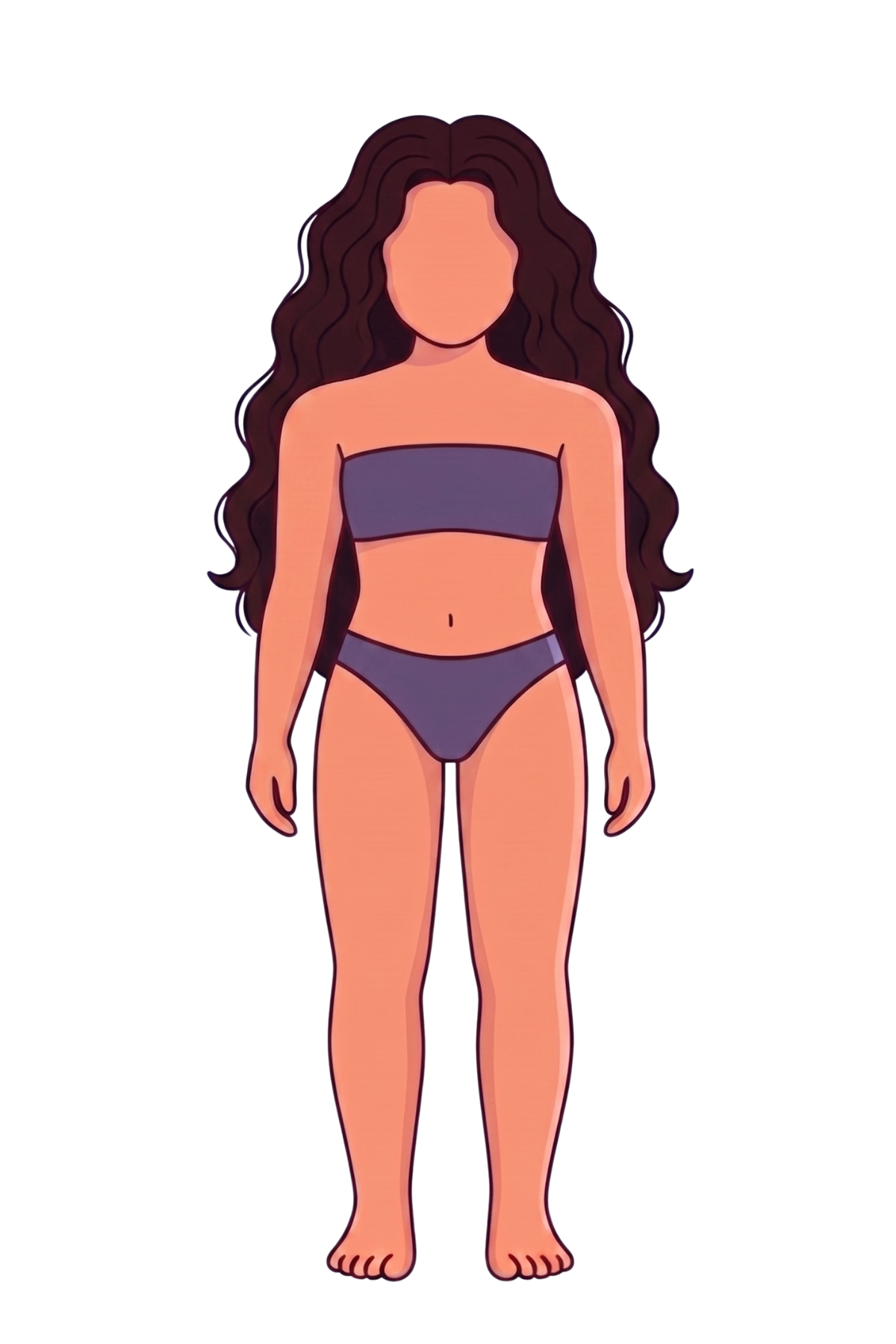
The exercise itself starts with a metaphor: imagine a length of silk chiffon, weighted at the bottom, draped over your shoulders. If it falls in a relatively straight line to the floor, your Dominant is Vertical. If your bust and hips push it outward into an elliptical shape, your Dominant is Curve (only available under 5'6"). Kibbe built the whole exercise around that image on purpose, it forces you to look at silhouette instead of picking apart individual features.
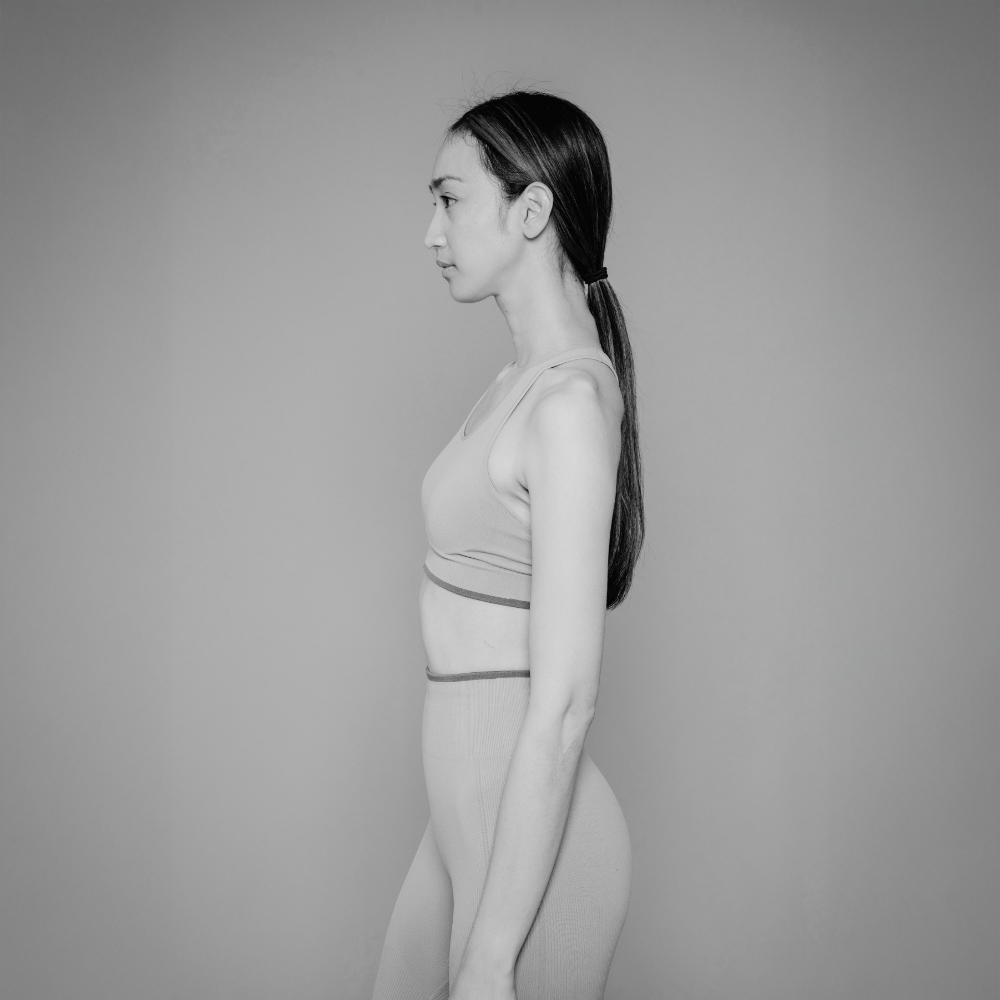
To actually do it: take a full-body photo in form-fitting clothes, trace your silhouette in any drawing software, optionally add internal lines to mark your curves and contours, then delete the photo layer so you're left with just the outline. What's left is your sketch, and reading the shapes inside it against the chart below is how you land on a Dominant and Additional element.
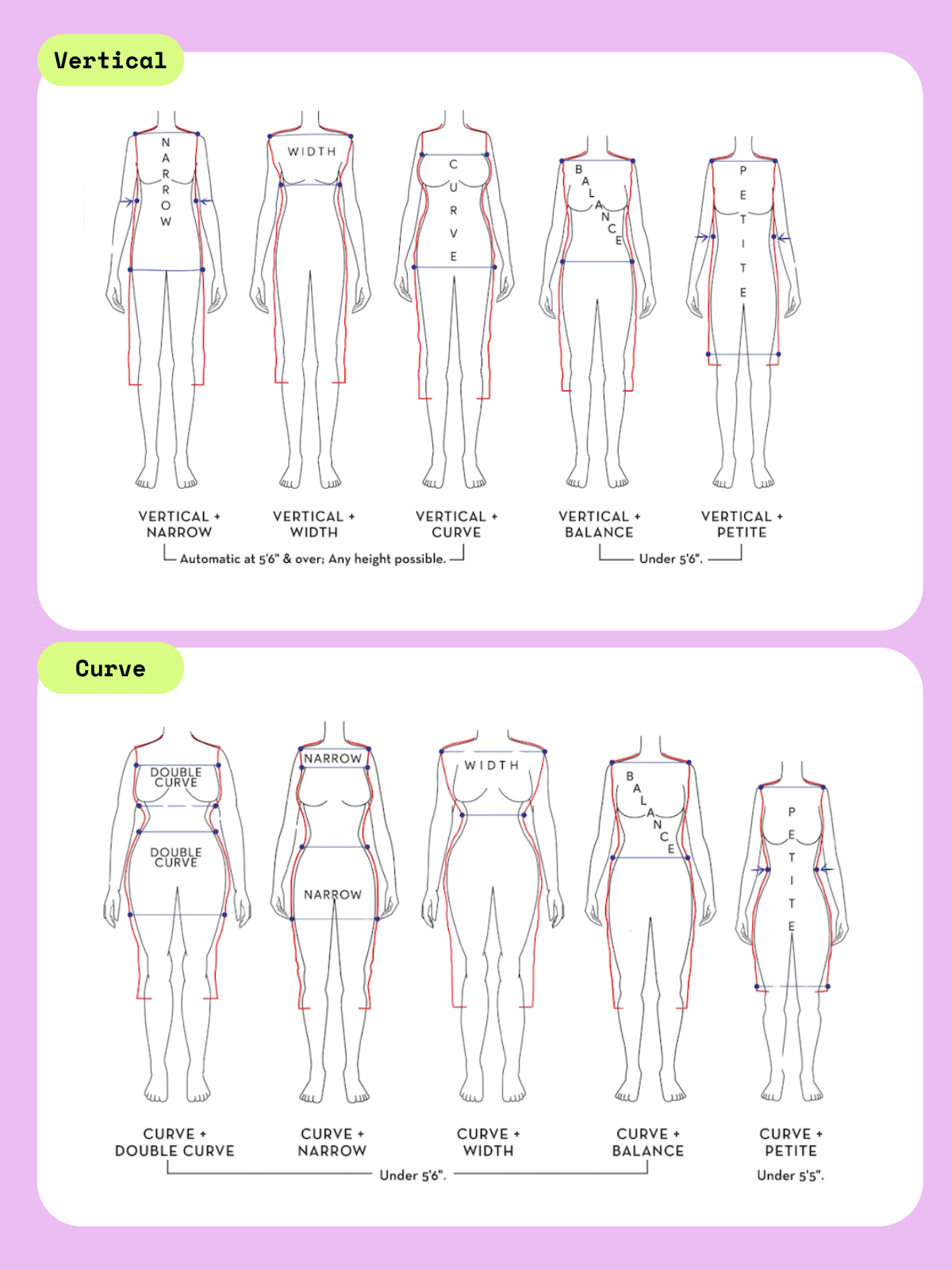
That's the manual version, straight from the book. This site also offers 3D body scanning and automated photo analysis that generates the same sketch and measurements for you, if you'd rather skip the tracing.
How Typing Works Today
There's more than one way to find your type, and each option gets you there a little differently. Here's the range, from fastest to most in-depth:
- Quiz: the same 15 questions on bone structure, body flesh, and facial features as the original 1987 version, updated so every answer has an image example next to it and the questions that actually determine your type are weighted more than the ones that don't.
- Photo Analysis: upload photos and our in-house measurement system, trained on 1,000+ verified Kibbe types, analyzes your proportions directly and generates a 3D model with virtual try-on, so you can see how the styles look on you.
- Personal Line Sketch: trace your own silhouette using the method straight from the 2025 book.
- Community Feedback: create a typing post on Reddit to get input from people who know the system well.
- Private Consultation: an in-person appointment with David Kibbe. The gold standard. The cost is over $5,000, but you walk out with a verified Image ID directly from the source.